After a particularly long and cold winter, my students and I were more than ready to dive into the excitement and anticipation of the spring season. Beginning in March, we began looking for evidence that spring had arrived as we explored the play yard each day. We read a multitude of books about spring and eagerly looked forward to warmer days ahead when we could ditch the snowsuits and scarves in favour of rain boots and sweaters. During Writer’s Workshop, I introduced new coloured markers to our marker caddies – pastel hues of pale blue, grey, pink, purple, and green. These became the children’s favourite markers to use in their work, and even though I didn’t explicitly call the new markers “spring colours,” that is what the children began referring to them as. Having previously explored seasonal colours in a fall inquiry many years ago (you can read about that here: The Colours of Fall Inquiry), I began to think about how we could extend the ongoing conversations about colours as we continued our exploration of seasonal changes.
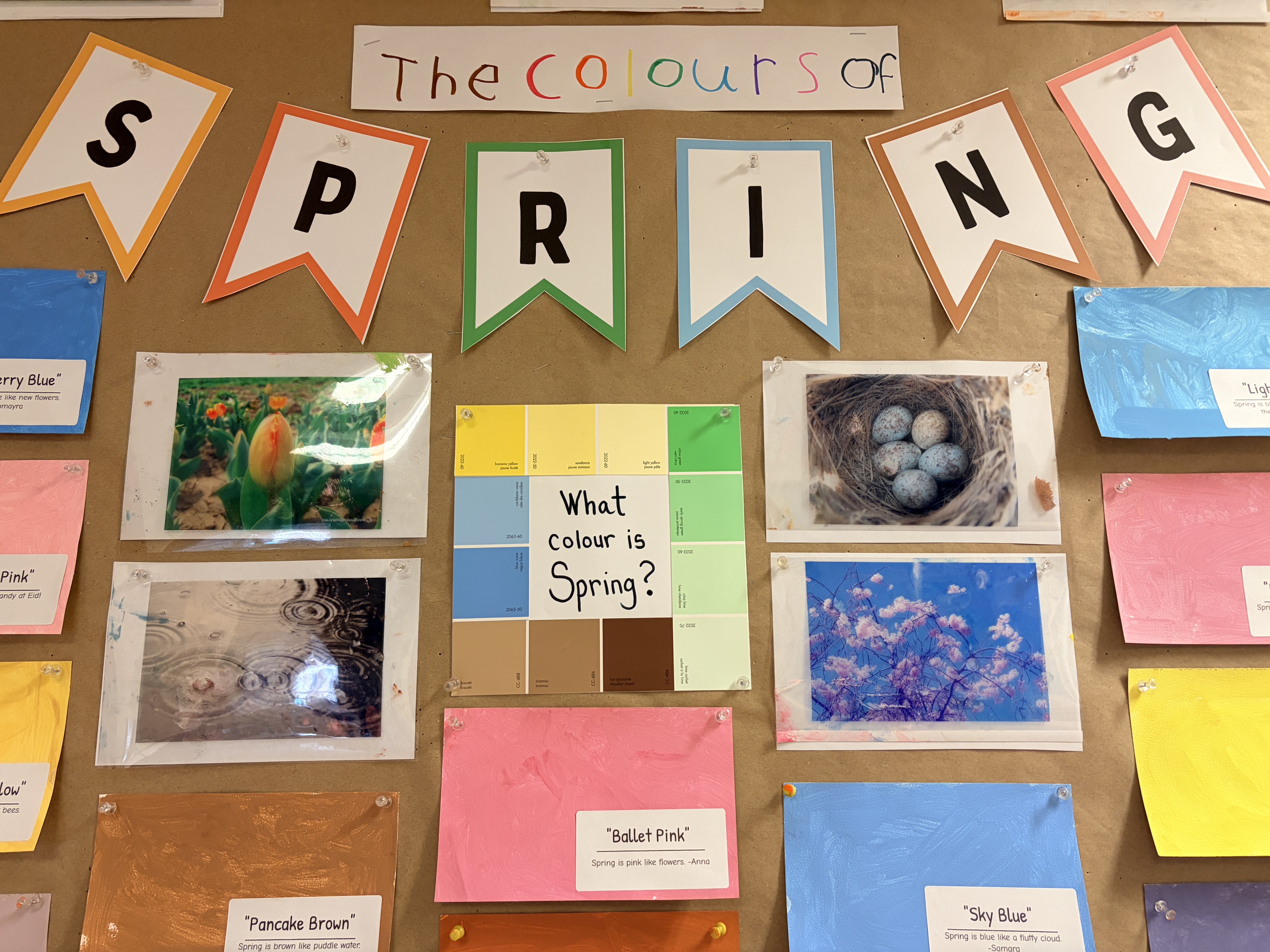
At the light table, I set up the following provocation: What colour is spring? Here, I printed off some spring photos on transparencies and placed them in the light. We had a book about the Colours of Spring and my favourite colour book by Pantone:
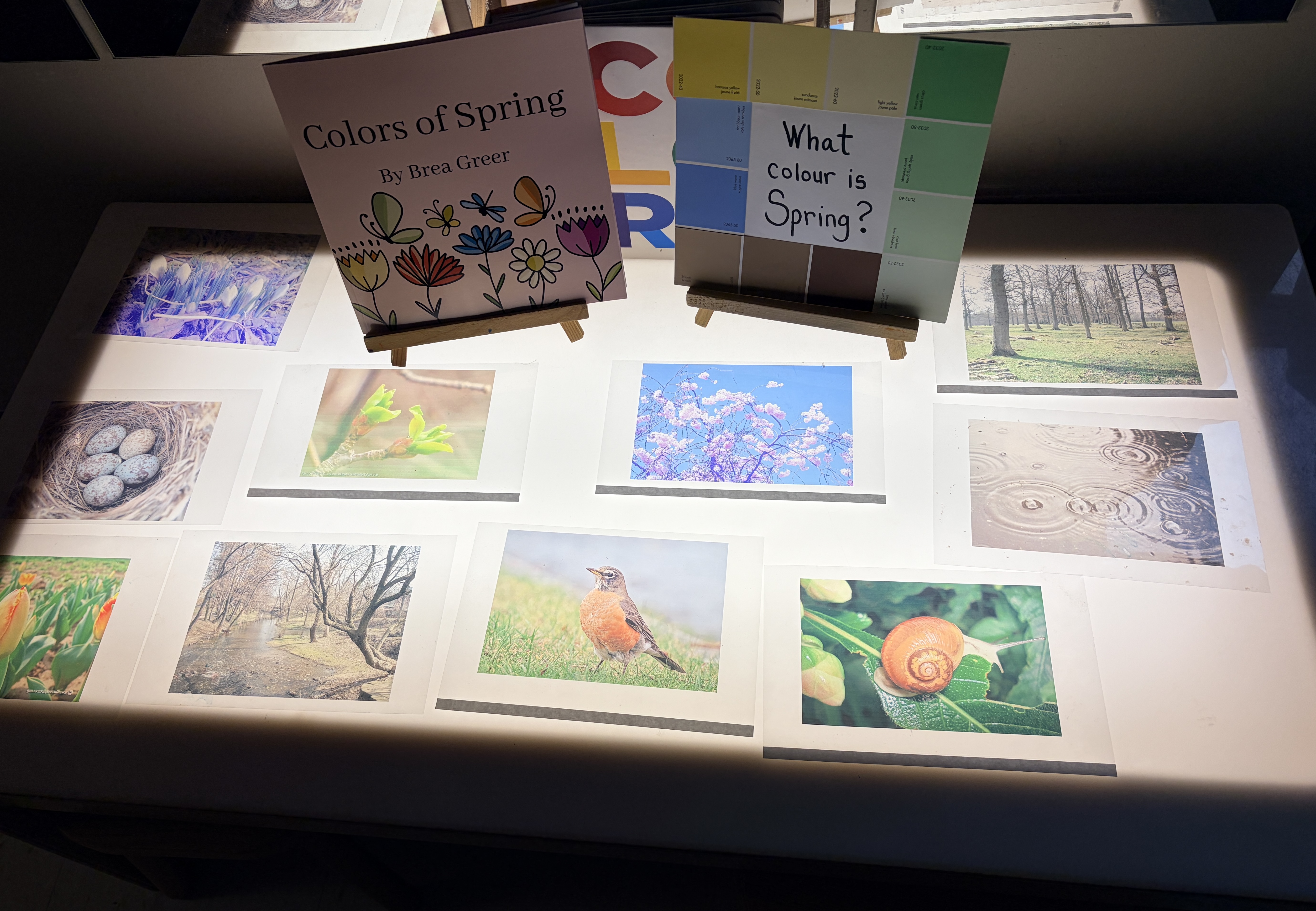
The children were immediately drawn to this set up. The photos sparked a lot of conversation as students talked about things they had seen outside in our play yard or in their own backyards. We asked the question, “What colour is spring?” and, as a follow up, invited students to create their own spring colour by mixing tempera paints at the classroom art studio.
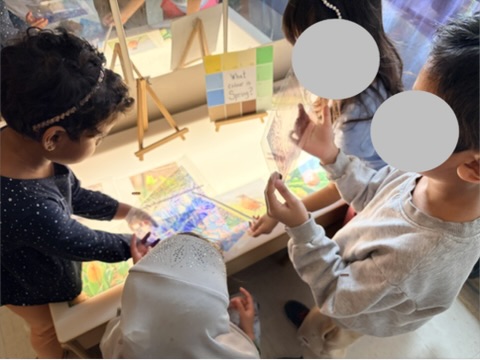
The children were beyond excited to mix the paint colours together to make their own special colour. I started each cup with about a tablespoon of white tempera paint and the children were then able to add colours to the white to mix up the colour of their choosing. After exploring the light table, most children had the colour they wanted to create in mind, some even opting to bring the transparencies from the light table over to the art studio for reference. After getting their paint to the appropriate shade, each student was given a 5×7 card to paint their colour swatch on.
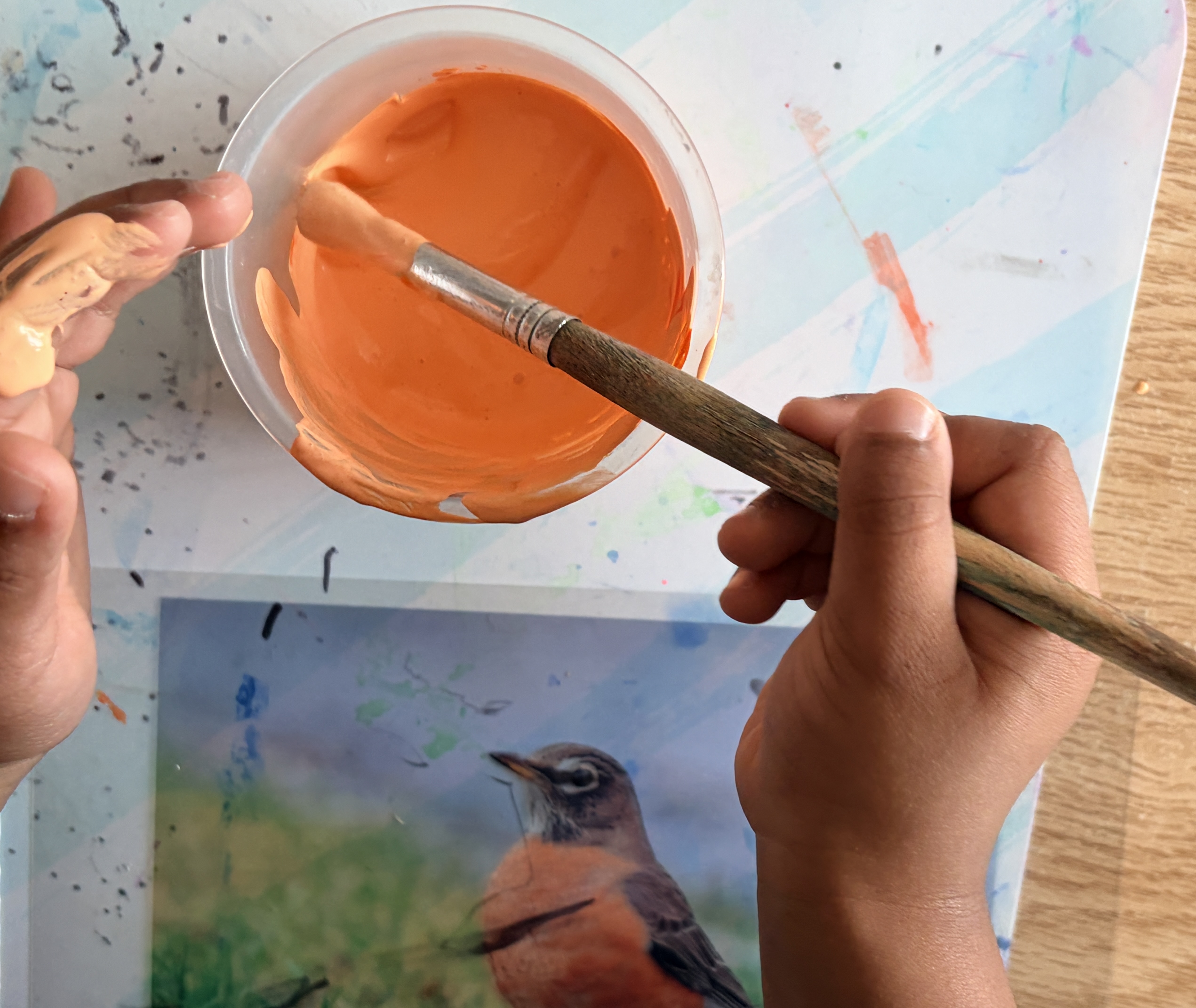
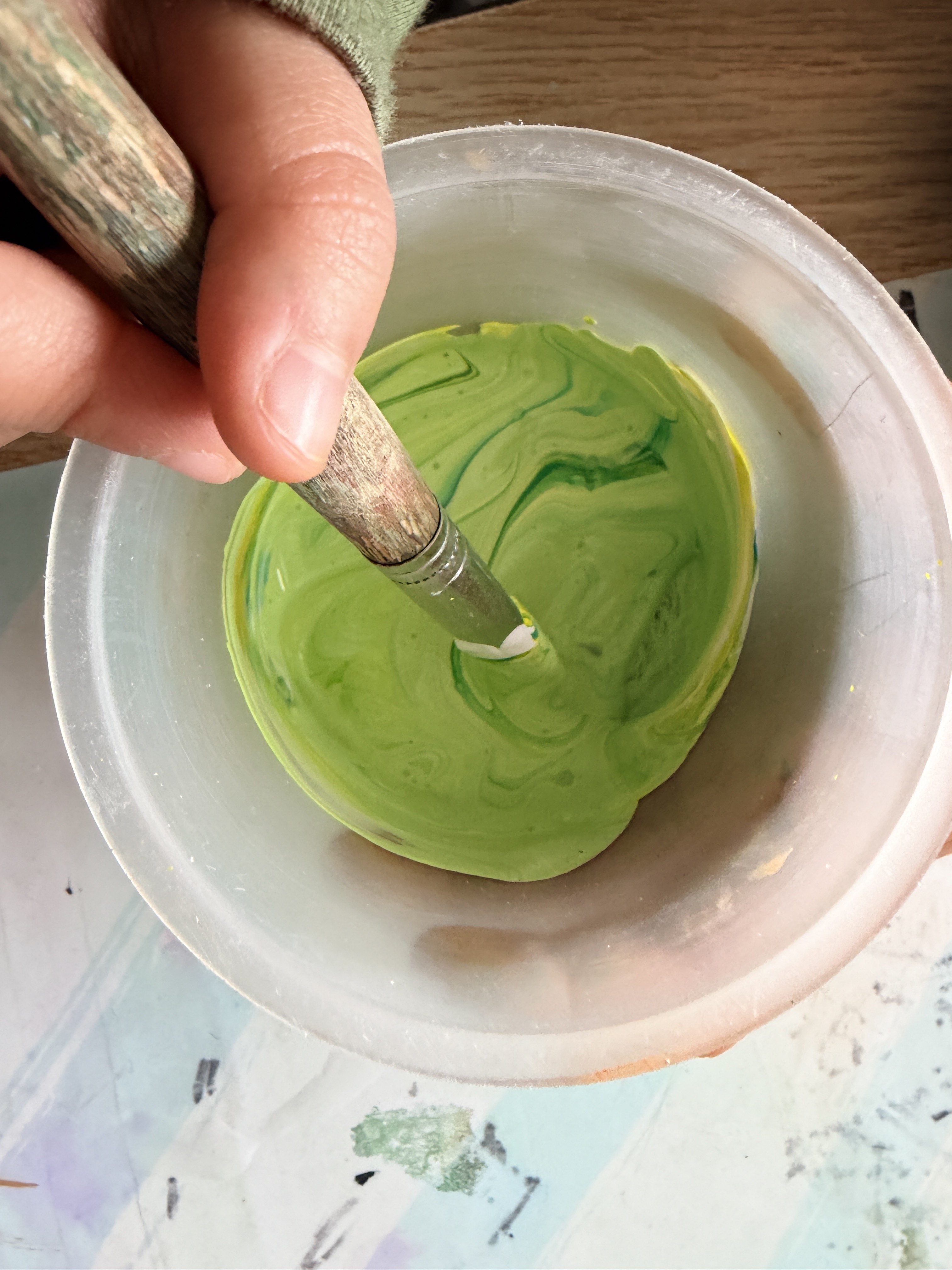
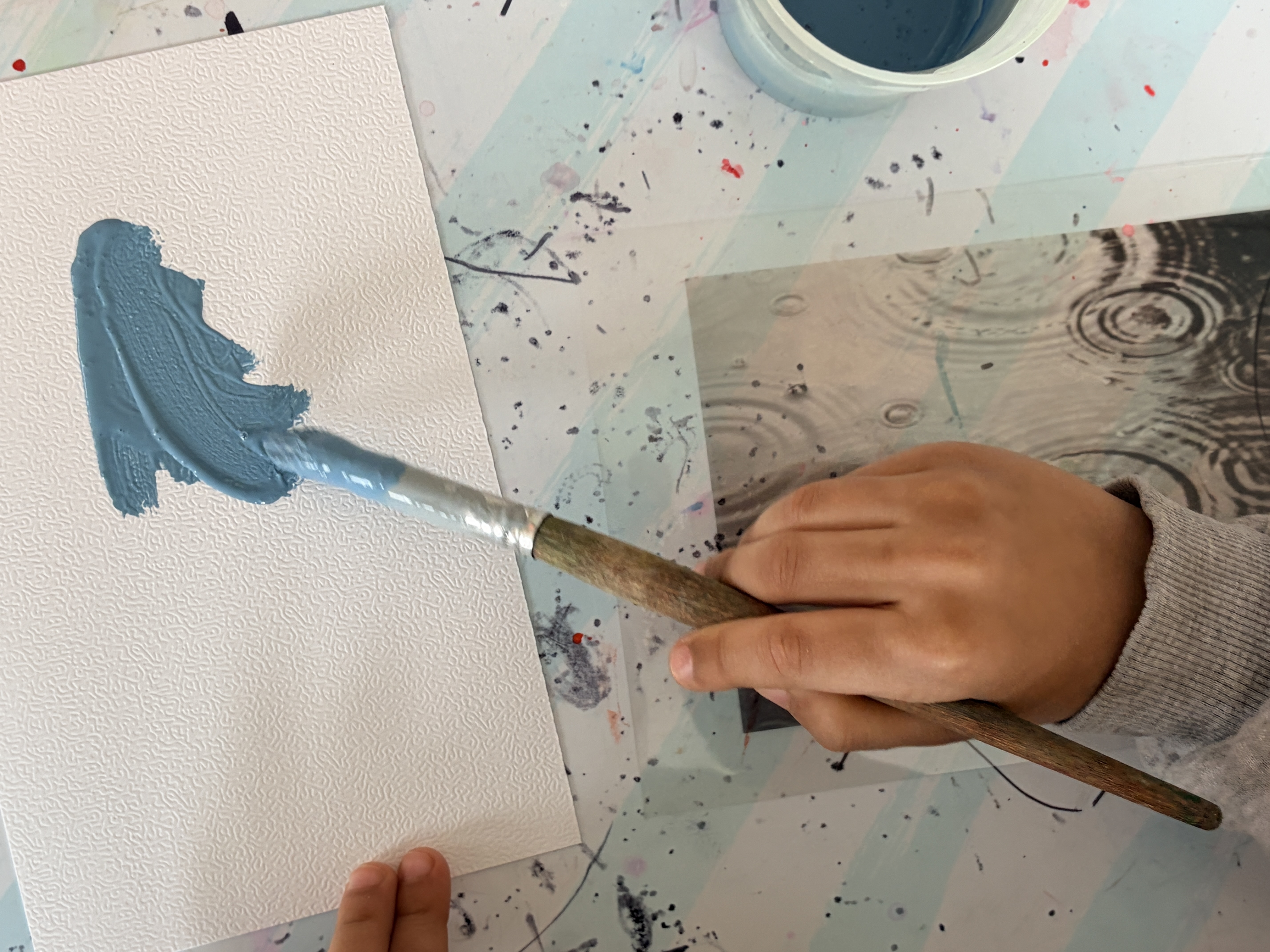
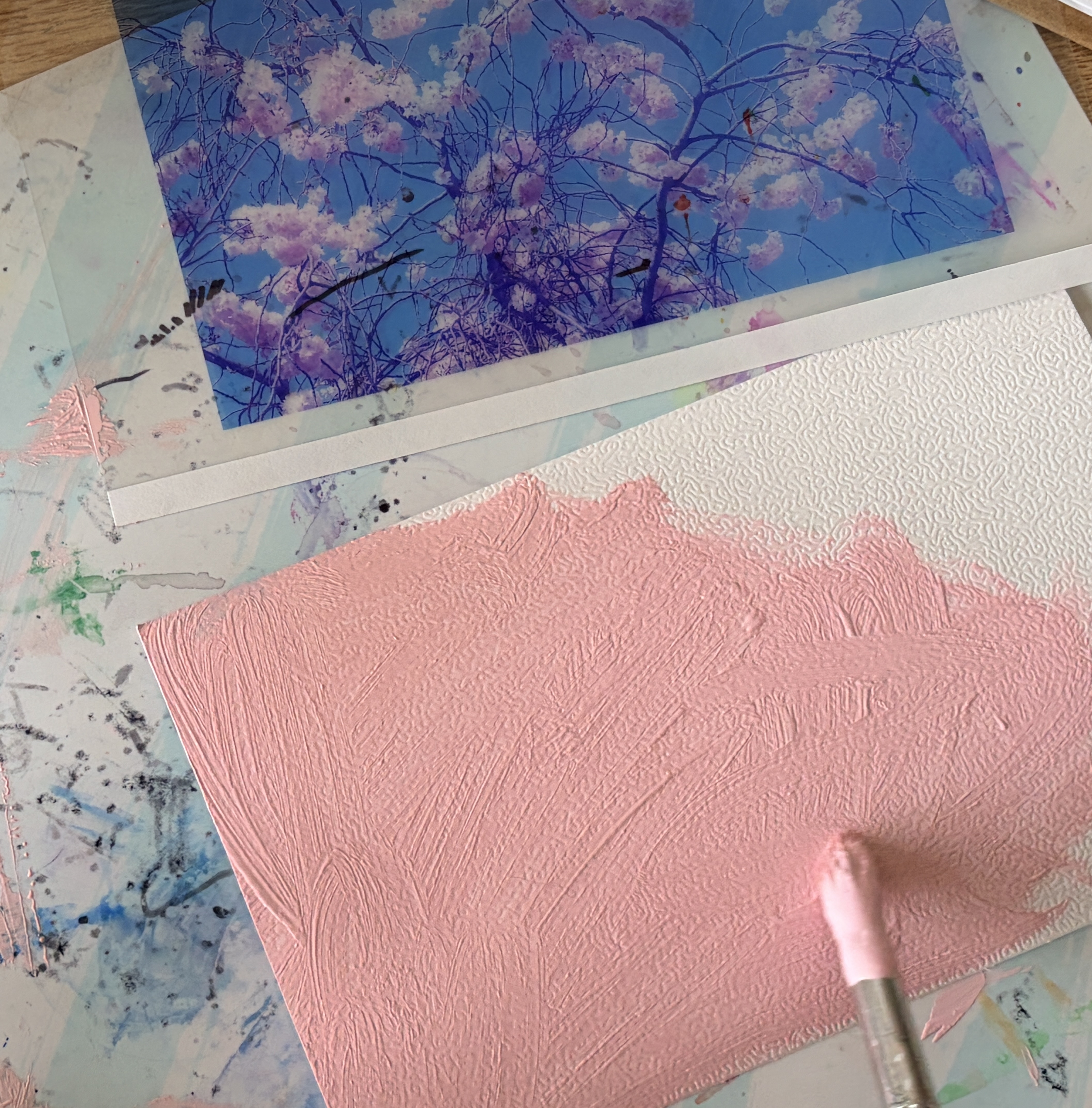
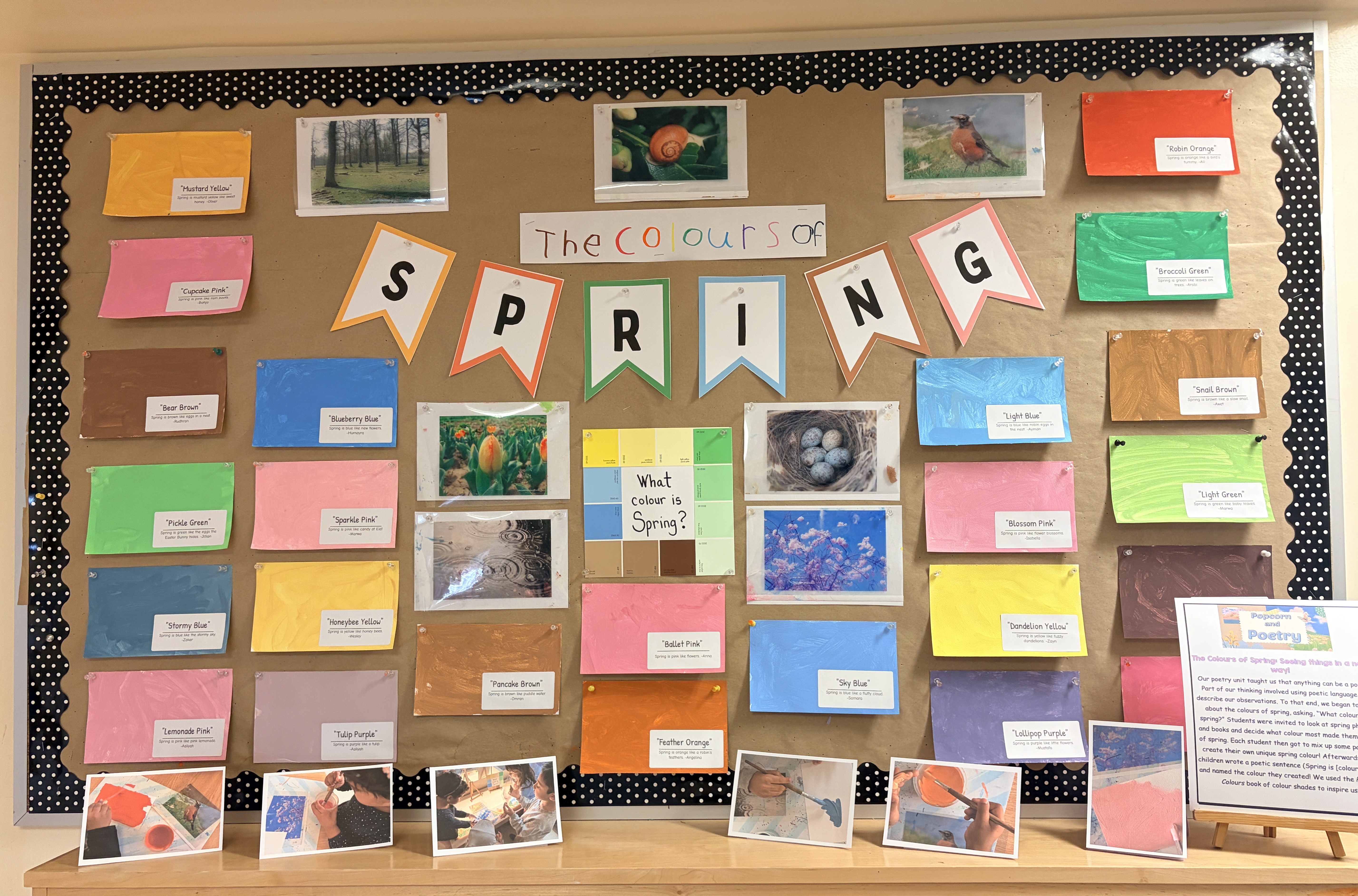
The next day, once our colour swatches were dry, we created up a follow up activity at the classroom writing table. In the month of April, we had been working on developing our thinking as poets, as part of a larger project with the other K-2 classes, for National Poetry Month. One of the skills I wanted to develop in our students was how to think like a poet. To that end, we created the following sentence for the children to fill in with their own ideas:
“Spring is [colour] like ______________.” Students recorded their ideas and drew a picture to illustrate their thinking.
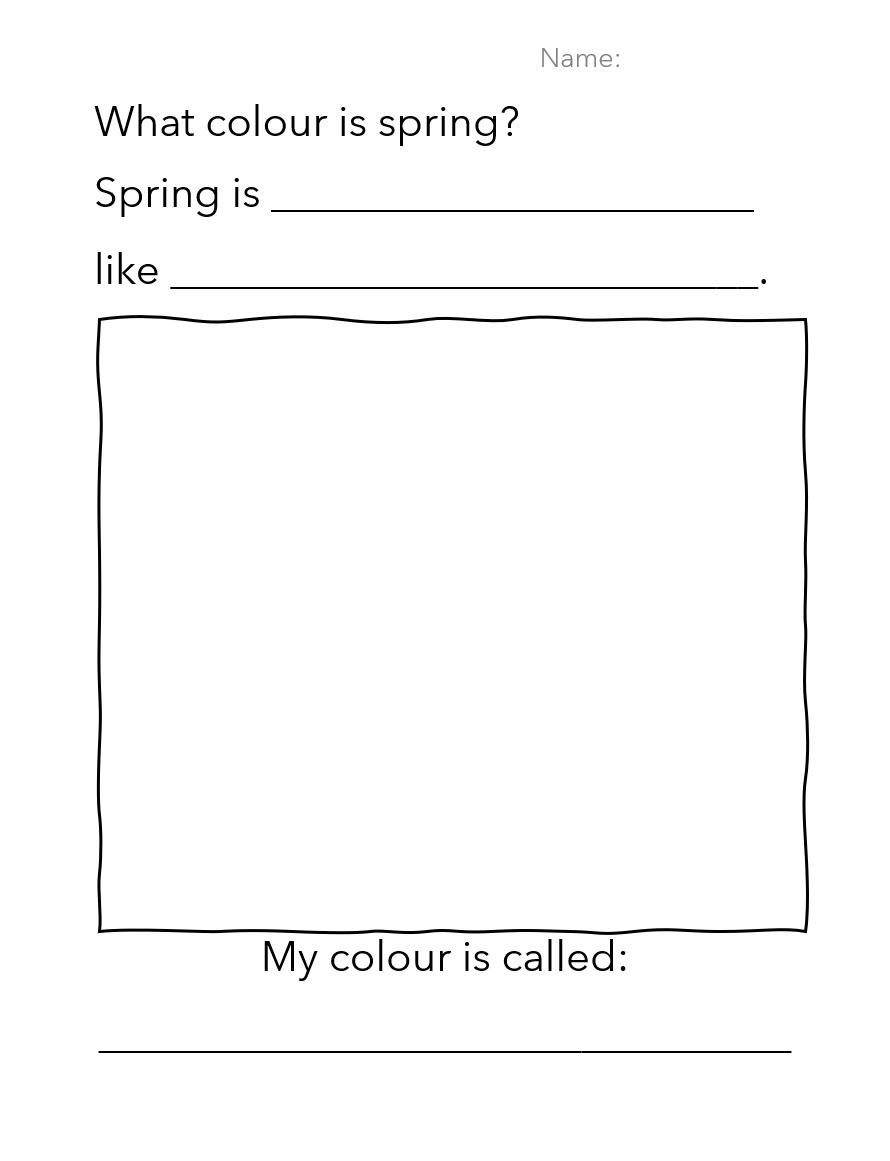
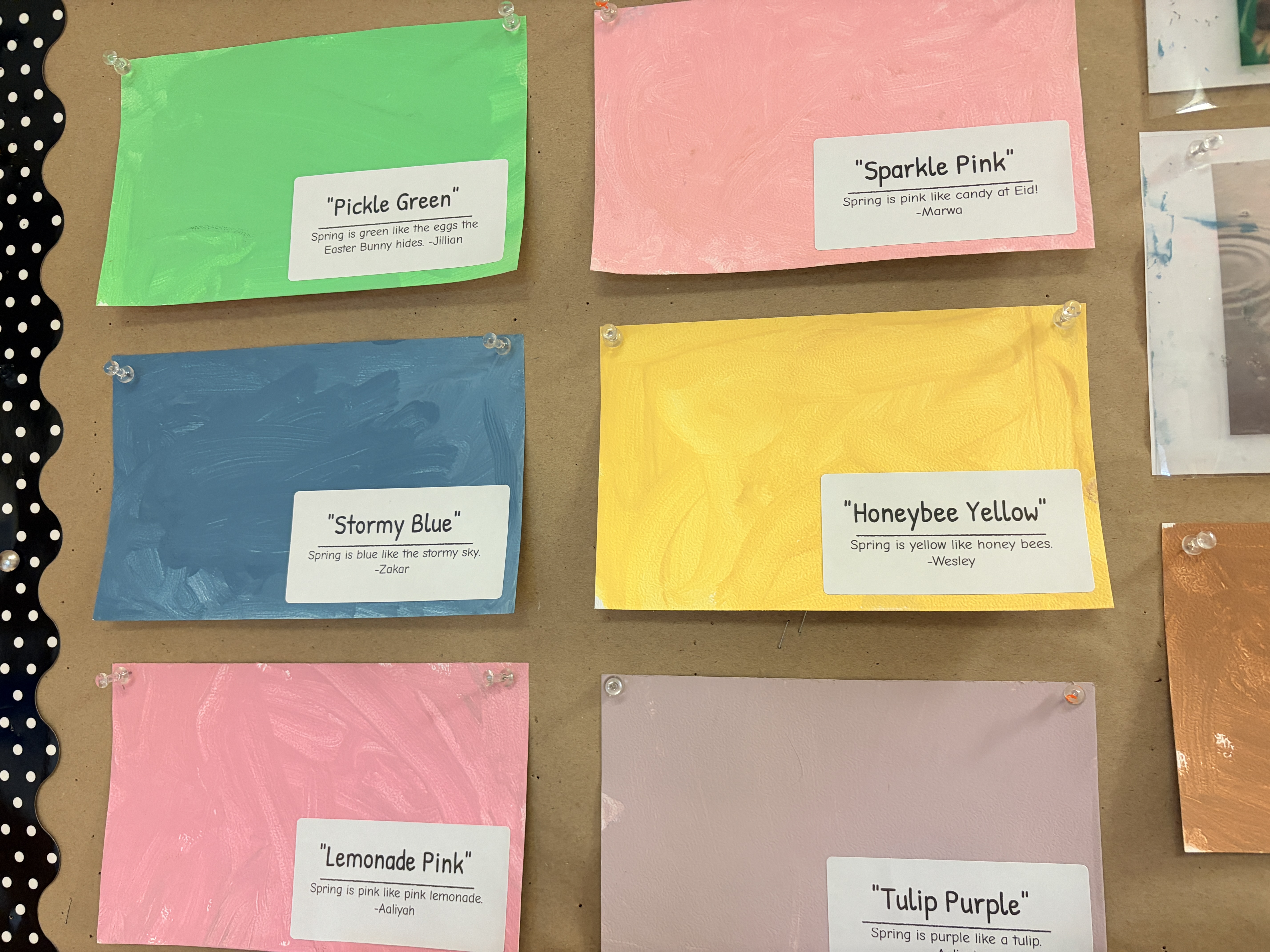
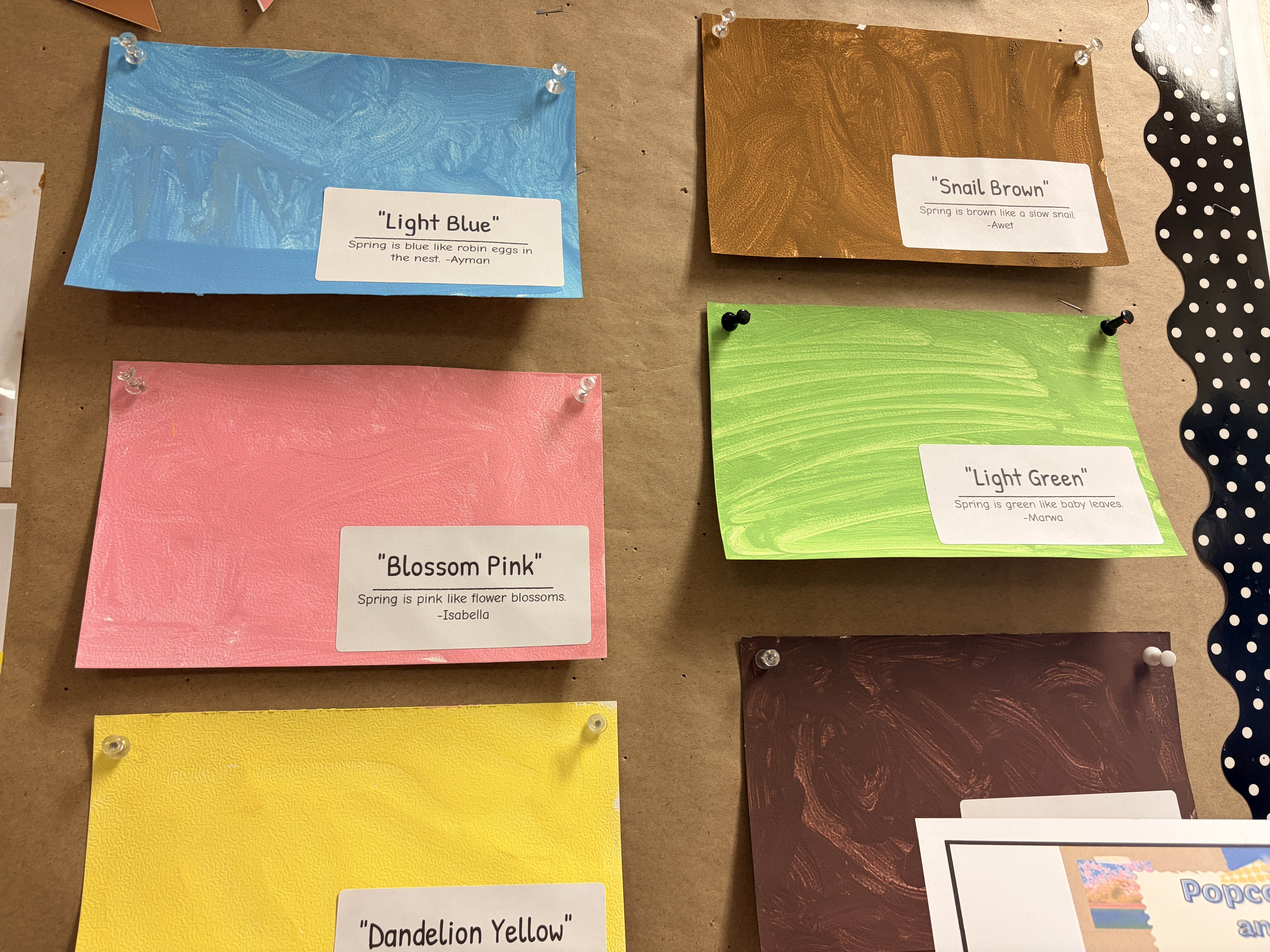
Then came the final step: NAMING their colour! We had a copy of Colours by Pantone on hand, which – if you are unfamiliar – is a book of colours where each colour is displayed in 20 different hues, all which have a unique name (e.g., “Bubblegum Pink,” “Blueberry Blue,” etc.). Some children knew instantly what they wanted to call their colour, having named it when they created it at the art studio. Others wanted to look through the Pantone book for ideas. In the end, everyone was excited about the name they came up with. I printed out the colour names and “Spring is [colour] like…” sentences on a label and attached it to each paint swatch. All of our beautifully unique spring colours are now displayed in the hall.
Stay tuned for an update about more of our poetry work for National Poetry Month!

